

 English
 العربية
 Русский
 中文
中文
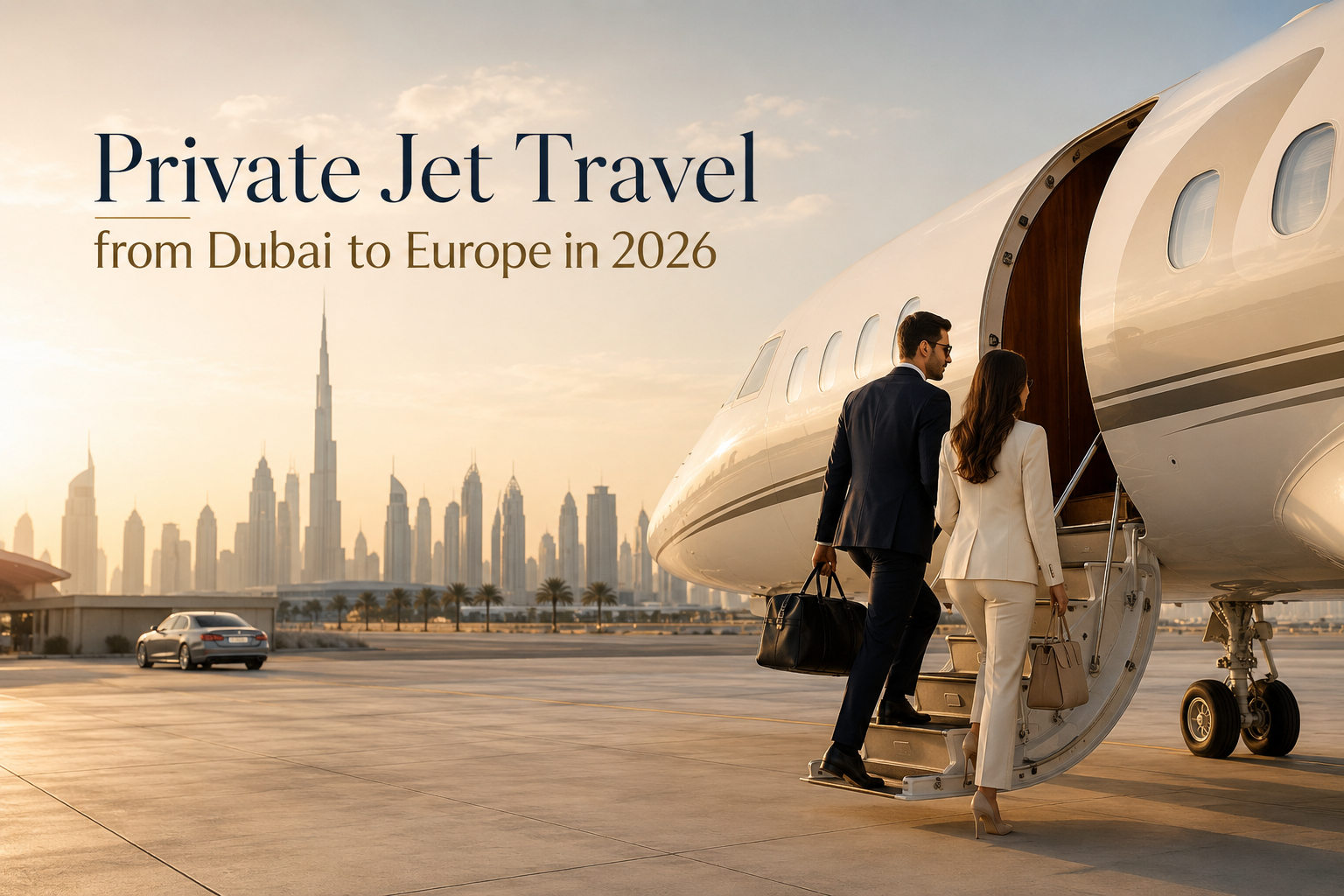
Let’s be honest: flying private between Dubai and Europe isn’t just about picking a sleek cabin and deciding whether you want sushi or caviar on the way.
The route connecting Dubai to hubs like London, Paris, and the French Riviera is one of the busiest luxury corridors in the world. But while the cabin experience is completely seamless, the backend mechanics of European airspace have become incredibly tight over the last couple of years.
Between rigid airport slots, lengthy permit approvals, and confusing line items on invoices, executing a perfect trip takes real logistical coordination. At Dash CharterDXB, we don’t believe in hiding behind industry jargon. If you are planning a trip to Europe this year, here is a transparent look at how the process actually works, what bottlenecks to expect, and how to protect your calendar.
The Operational Bottlenecks: Permits & Airspace Slots
You can’t just spool up the engines at DWC and point the nose toward western Europe. The moment an aircraft enters European airspace, it is subject to some of the strictest traffic management rules on earth. Two major factors will dictate your schedule:
Landing Permits Require Pre-Planning
Getting an overflight permit to pass through airspace is quick. Getting a landing permit for an aircraft registered outside of Europe (like a UAE-registered tail) is a different story.
European civil aviation authorities run deep compliance audits on every single flight. They verify the aircraft’s Third Country Operator (TCO) safety certificates, historical maintenance logs, and international liability insurance.
Because of this vetting, we need to submit permit paperwork 3 to 5 business days before wheels-up to guarantee a stress-free departure. If you try to swap out a guest or add a last-minute passenger to the manifest, the operator has to resubmit everything to international immigration border systems. That minor change can put a temporary hold on your permit, leaving you stuck on the tarmac waiting for a fresh clearance.
The Rigid Reality of European Airport Slots
In the Middle East, airspace and ground handling are relatively flexible. In Europe, airports operate on a strict “slot” system—a non-negotiable, pre-assigned window for your exact landing and takeoff time.
Primary corporate and VIP hubs like Paris Le Bourget, London Farnborough, and Nice Côte d’Azur run at near-maximum capacity. During massive seasonal events—like the Monaco Grand Prix, Cannes Film Festival, or the height of the summer holiday rush—slots are treated like gold.
Furthermore, Europe’s strict environmental laws mean that night curfews and noise limits are heavily enforced. If your departure from Dubai gets delayed by an hour, you might miss your arrival slot in Europe entirely. The local authorities won’t just make you circle the airport; they will often force the pilot to divert to a completely different airport hours away or mandate an overnight delay before you can try again.
Choosing the Right European Hub
When organizing your itinerary from Dubai—whether you prefer to depart from the private terminals at Al Maktoum International (DWC) or Dubai International (DXB)—your choice of arrival airport can completely change your ground travel experience.
Dubai to London
London is always our most requested destination. While commercial flights crowd Heathrow, private aviation relies on dedicated business airports. Farnborough and Biggin Hill are built exclusively for private travelers, meaning you can clear customs and be in the back of your car within 15 minutes of landing. If you are flying an ultra-long-range heavy jet and need 24-hour flexibility without night curfews, Luton or Stansted are your best options.
Dubai to Paris
For trips to Paris, Le Bourget is the undisputed king. It is Europe’s busiest dedicated business airport. The private terminals here are highly secure and designed for total discretion, allowing you to step right from the wing into a waiting vehicle, bypassing the chaotic commercial traffic entirely.
Dubai to Nice & The French Riviera
Nice Côte d’Azur Airport is stunning, but logistically, it’s a major bottleneck during the summer. Ramp space to park airplanes is incredibly scarce. During peak months, the airport frequently forces a “drop and go” rule. This means the jet can land to let you off, but it must immediately fly empty to park at a secondary airport in Italy or northern France, then fly back days later to pick you up.
Auditing Your Quote: How to Spot Hidden Fees
If a broker or operator gives you a remarkably low headline price, be careful. Unless you are dealing with a completely transparent provider, a lot of industry costs get pushed onto a “post-flight invoice.” When reviewing a charter agreement, always check how these five areas are handled:
- Winter De-Icing Charges: If you fly into northern or central Europe between November and April, de-icing the wings before takeoff is a legal safety requirement. The cost of the fluids and the airport labor can easily add several thousand dollars to a bill. Unless you have a guaranteed contract that includes it, this is almost always billed to you weeks after the flight.
- Aircraft Repositioning (Ferry Flights): If a provider tells you they found the “perfect jet” but it’s currently sitting in Riyadh or London, you have to pay for the empty flight hours it takes to bring that plane to Dubai to pick you up. At Dash CharterDXB, we protect your budget by prioritizing locally based aircraft or “floating fleets” that are already on the ground here.
- High-Density Surcharges: Landing fees aren’t flat rates. Ultra-premium airports charge massive premiums for landing, handling, and daily parking. Staying an extra weekend at a congested airport can cause these ground fees to add up fast.
- Hangarage Fees: If a massive winter storm hits your European destination, leaving a multi-million-dollar jet exposed to freezing rain or snow isn’t an option. Moving the aircraft into a heated hangar keeps it safe and operationally ready, but hangar rental rates are notoriously high.
- Bespoke VIP Catering: Standard high-end catering (fresh fruits, premium hot proteins, and standard drinks) is built into your charter. But if you request specific meals picked up from a Michelin-starred restaurant, rare vintages of wine, or highly specific luxury ingredients, those are treated as out-of-pocket extras.
The Dash CharterDXB Approach
A truly seamless flight across continents isn’t luck—it’s down to flawless preparation in the days before you board. It requires an aviation partner who balances the high standards of Middle Eastern luxury with a strict, proactive understanding of European regulatory laws.
By securing your slots early, handling customs clearances long before wheels-up, and giving you an honest, upfront breakdown of costs, our team makes sure your trip is exactly what it should be: quiet, predictable, and perfectly aligned with your schedule.
Frequently Asked Questions (FAQs)
How long does the flight from Dubai to Europe take?
It depends on the wind and your exact destination, but a non-stop flight to major Central European cities like London or Paris usually takes between 6.5 and 7.5 hours. Large-cabin, ultra-long-range jets can cut that down slightly by cruising at higher speeds, while smaller midsize jets might require a quick stop to refuel if they hit heavy winter headwinds moving west.
Which Dubai airport does Dash CharterDXB use?
We highly recommend the VIP terminals at Al Maktoum International Airport (DWC) in Dubai South. It’s built for private aviation, meaning faster taxi times, total privacy, and world-class lounges. However, if it fits your schedule better, we can easily arrange your departure out of Dubai International Airport (DXB).
Why are European airport slots so much stricter than the Middle East?
European airports are deeply restricted by local municipalities. Because many of them are located right next to dense residential areas, local governments enforce strict caps on hourly traffic to control noise pollution, manage air traffic congestion, and lower carbon emissions.
Can I bring an extra guest along at the last minute?
You can always ask, but we strongly advise against it for European routes. European border control requires passenger data to be cleared hours before the flight departs. Trying to change the manifest at the zero hour can freeze your landing permit approval. If you miss your takeoff window while waiting for the paperwork to clear, you might lose your arrival slot in Europe entirely, delaying your trip by a full day.
What are the rules for flying with my pet to Europe?
Europe takes biosecurity very seriously. To bring a pet into the cabin, they must be microchipped, have a valid rabies vaccine, and hold an official international health certificate. Crucially, you must land at an airport that is a legally designated Pet Border Control Post. Because many private jet terminals don’t have the licenses to clear animals, we have to plan your entire arrival route around your pet’s paperwork.